Parasites
Ivermectin for Birds – What Is Ivermectin Used For?
The dosing walkthrough for the antiparasitic most bird keepers ask about — what it treats, and where a vet must confirm.
They split into two groups: the external ones (mites, lice) that live on skin and feathers, and the internal ones (worms, coccidia) that show themselves as a bird slowly losing weight and shine while nothing else looks obviously wrong.
Ivermectin is the antiparasitic most keepers end up holding a bottle of and asking about, and every dose we publish is cited to veterinary sources and framed as a number your vet confirms, not a shortcut around one. Scaly-leg mites, feather mites, and a safer approach to deworming each get their own honest treatment, with pet-bird crossover called out where the safety math changes. For the wider map of what else can go wrong — a lot of what looks like mites turns out to be respiratory or nutritional — our bird health guide sits behind these pages.
A bird losing weight day over day, blood in the droppings, or laboured breathing has moved past what you can manage at home. Talk to an avian vet.
The dosing walkthrough for the antiparasitic most bird keepers ask about — what it treats, and where a vet must confirm.
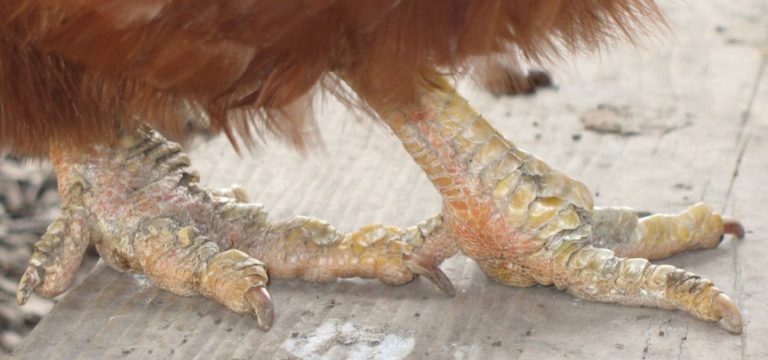
Scaly leg mites burrow under the scales on a hen's legs and lift them into rough, chalky ridges — the earliest signs to catch, and the treatments that kill the mite without damaging the leg underneath.
Mites hide in the feather bases and in coop cracks, not just on the bird — a look at which mite you're dealing with, and the two-front treatment that clears them for good.
The safe-deworming walkthrough for backyard chickens — when a worm load needs treating, and what a vet reaches for to clear it.