
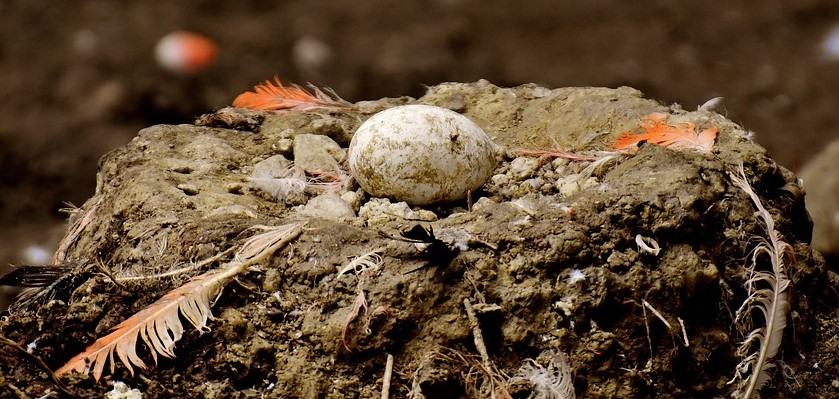
Fun fact: A female bird that’s not exposed to a male will still lay eggs.
Female birds, much like female humans, ovulate whether or not a male of their species is involved. The only difference is in the size of the egg. In humans, female eggs are microscopic, whereas, in birds, the egg becomes larger and is enclosed in a shell before it is expelled.
Although most female birds usually don’t have any difficulty laying eggs, they may, on occasion, encounter challenges. The most common of these is egg binding. If left untreated, the bird can develop complications and eventually die.
What is egg binding, and how do you treat it? Here’s everything you need to know about the condition.
What Is Egg Binding?
This condition occurs when a female bird is unable to expel an egg. Instead, the egg becomes stuck somewhere along the oviduct, and the bird cannot pass it out of its body.
An egg bound bird that is unable to expel the egg within a 24 to 48-hour period will usually die. Therefore, it needs to be addressed quickly, preferably by an experienced avian veterinarian, before it becomes life-threatening.
Young birds laying eggs for the first time, as well as older hens, are more vulnerable to becoming egg bound. While the exact causes of the condition in egg bound chicken and female birds of other species are unknown, a common reason is feeding your bird a nutritionally unbalanced diet.
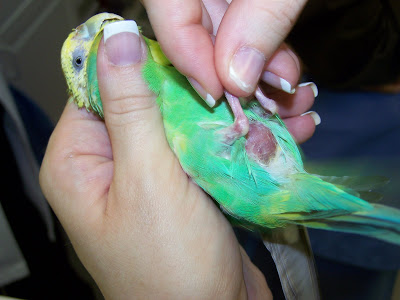
This is frequently seen in birds on all-seed diets that are deficient in several vitamins and minerals, particularly calcium, vitamin D3 (which the bird needs to absorb calcium), and vitamin A. These nutrients are necessary for the healthy formation of the eggshell and the proper contraction of the oviduct muscles and those of the uterine wall. Improper muscle contraction is a major cause of egg binding in birds.
Low levels of dietary calcium may also lead to the production of shell-less or soft-shelled eggs and a host of other abnormalities that makes it difficult for the hen to pass the egg. Even excessively large eggs may get stuck on their way out.
Lifestyle diseases like obesity resulting from an all-seed, high-fat diet or sedentary living may also cause egg binding. Old age, various hereditary conditions, and even an improper laying environment are all potential causes of the condition.
What Egg Binding Looks Like — Signs and Symptoms
The classic picture is a hen who was laying normally and has suddenly stopped, is straining without producing an egg, and looks visibly uncomfortable in a way you can spot from across the coop or the cage. Merck’s reproductive-diseases chapter and PoultryDVM’s egg-binding page describe the same clinical presentation across species, with a handful of specific tells that make identification straightforward once you know what you are looking for.
What you will see. Fluffed feathers and a hunched posture, as though she cannot get comfortable. Labored, rapid breathing — the mass of a stuck egg presses forward against the air sacs, making every breath take more work. A wide, penguin-like stance with legs held apart, and a reluctance to walk or perch; some hens develop visible lameness because the pressure of the egg is on the lumbosacral nerves. A swollen, distended abdomen you can feel as a firm mass low in the belly (an egg feels firm; ascites fluid feels soft and squishy — the two conditions get mistaken for each other and are covered further below). Prolonged sitting in the nest box, straining behavior with tail lifted, appetite loss. Droppings often look abnormal — too small, misshapen, or absent entirely — because a stuck egg presses against the cloaca and the intestinal opening seals shut while the hen strains.
Species-specific presentations. Budgies, cockatiels, and lovebirds present slightly differently from a laying chicken: sitting on the cage floor rather than perching, wings drooping, tail bobbing with each attempted strain, sudden weakness in a bird who was fine yesterday. First-time layers and older hens are the two populations most likely to develop egg binding — a young budgie hen on her first clutch and an aging chicken past her peak lay are both classic cases. If your bird fits either profile and shows any of the signs above, egg binding belongs at the top of the differential.
The timing tell. A hen who has been laying regularly and then stops passing eggs, while showing straining behavior, is the classic setup. In chickens, ask yourself: has she passed an egg in the last 24 hours? In pet birds on a regular clutch cycle, the same question applies to her cycle. A stopped-laying hen with a swollen abdomen and straining is not the moment for wait-and-see — it is the moment to act.
What else can look like egg binding. Two conditions mimic the presentation and are worth ruling in or out with a vet’s exam before treating: ascites (fluid in the coelom — covered on our ascites page) presents with a soft distended belly rather than a firm egg mass, and reproductive-tract tumors or egg-yolk peritonitis produce similar hunched-and-straining behavior without the palpable egg. That is why definitive diagnosis of egg binding is a vet exam, not a home diagnosis on symptoms alone.
The time window. A hen unable to pass a stuck egg typically dies within 24 to 48 hours if the case is untreated — sometimes faster if the egg has already broken inside her and caused peritonitis. That window is why recognizing the signs matters. Once you have identified egg binding, the response moves quickly from recognition into action; the sections below cover safe home first response and when to escalate.
How to Help an Egg Bound Chicken or Pet Bird
If your female bird is egg bound, you need to have an avian veterinarian see them as soon as possible. Remember, time is of the essence here, so acting quickly could be the difference between life and death.
Egg extraction by external massage is a veterinary procedure — Merck notes that manual manipulation is done “under anesthesia” with steady digital pressure between the sternum and the egg, because manipulation of a stuck egg by an untrained hand risks uterine rupture, egg breakage inside the bird, and internal hemorrhage. Do not attempt this at home. What you CAN do while arranging a vet visit: place the bird in a warm (about 85°F), humid environment — a small enclosure with a warm damp towel underneath, or a steam-filled bathroom — for 15–20 minutes at a time to help relax the oviduct muscles. Offer a calcium supplement (crushed calcium carbonate tablet dissolved in water, or a liquid calcium product) if you have one; low calcium impairs the contractions the bird needs to pass the egg.
If the egg is stuck and won’t pass with medical treatment, a vet may perform ovocentesis: with the bird sedated, they insert a fine needle into the egg through the cloaca, drain the yolk and albumin so the egg collapses, then carefully remove the shell fragments piece by piece. Retained shell fragments cause infection and oviduct damage, so complete removal matters — which is why the procedure needs a vet’s sedation, sterile instruments, and visualization tools, not a home attempt.
Vets also use oxytocin (or its avian equivalent, arginine vasotocin) to stimulate oviduct contractions and help the hen pass the egg. Calcium is often given at the same time — calcium is what the oviduct muscles need to contract effectively, so low-calcium birds may need calcium correction before the oxytocin has anything to work with.
Prevention Is Always Better Than Cure
Although egg binding is rare, the good news is – it is preventable. Ensure your bird gets proper, balanced nutrition and lives in a stress-free environment.
Finally, keep a close eye on your birds and learn their daily habits so that you catch any symptoms of egg binding early on.
see how to talk to a licensed avian vet online, including options when no local vet sees birds.
References
- Merck Veterinary Manual. Reproductive Diseases of Pet Birds. Merck & Co., accessed August 2026. https://www.merckvetmanual.com/exotic-and-laboratory-animals/pet-birds/reproductive-diseases-of-pet-birds
- The Chicken Chick. Chicken Egg Binding: Causes, Symptoms, Treatment, Prevention. Accessed August 2026. https://the-chicken-chick.com/chicken-egg-binding-causes-symptoms/
- PoultryDVM. Egg binding in Chickens: Signs, Treatment & Prevention. Accessed August 2026. https://poultrydvm.com/condition/egg-binding