

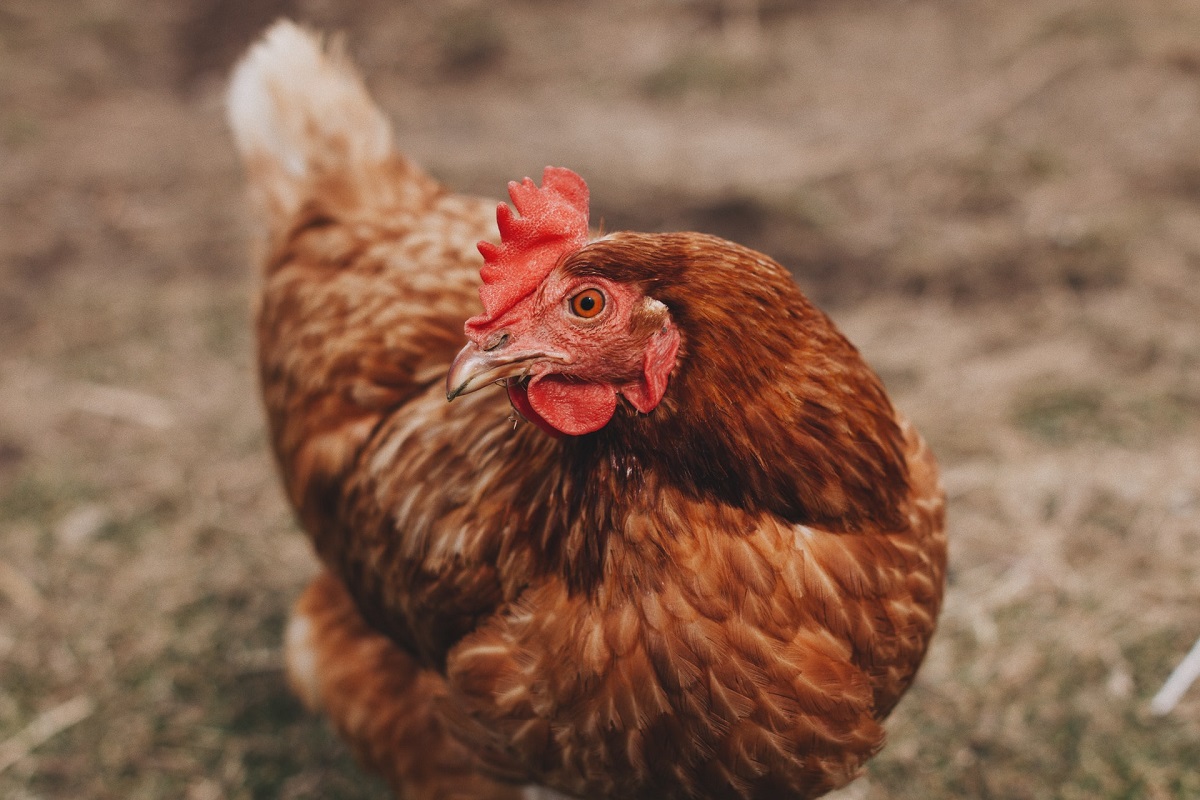
Ascites isn’t a very common condition in backyard chickens. That is not to say you won’t come across it if you keep poultry. Ascites is not an actual illness in itself. Rather, it’s a symptom of an underlying condition pointing to the fact that there’s something terribly wrong with your chicken.
What exactly is ascites, and what causes it? Here’s everything you need to know about the condition.
What Is Ascites
Ascites aka water belly is a condition brought about by fluid buildup in a chicken’s peritoneal cavities. This buildup results from heart failure or pulmonary hypertension and is more common in aging hens and broilers.
What Causes Ascites (a.k.a. ‘Water Belly’)
Broilers grow to market weight in about six weeks — much faster than their heart and lungs can comfortably support. The lungs of a chicken are structurally rigid (unlike mammalian lungs, they don’t expand and contract), so as the bird’s body outgrows the lung’s oxygen-delivering capacity, the heart pushes harder to move more blood through a fixed lung volume. That pressure backs up into the right side of the heart, which enlarges and eventually fails; blood then pools in the liver, fluid leaks out into the abdominal cavity, and the visible result is “water belly.”
Cold stress in the first three weeks of life makes this cascade much more likely — a common Merck finding — because cold pushes the metabolic oxygen demand even higher during the window when the cardiovascular system is most vulnerable.
In aging hens, ascites more often stems from combinations of underlying disease: obesity that strains the cardiovascular system, internal laying (with egg yolk peritonitis), reproductive-tract tumors, chronic liver disease, or heart disease that develops with age. Poor ventilation and heat stress can accelerate an already-vulnerable bird, and poultry flocks kept at higher altitudes carry an added genetic and environmental predisposition. Establishing which of these underlies the ascites in an individual hen requires a vet’s exam — the treatments differ.
Symptoms
The symptoms of ascites in birds are oftentimes similar to those of egg-bound chickens. However, rather than the penguin-like posture observed in egg-bound hens, chickens with Water Belly adopt a wider-legged stance due to their fluid-filled cavities. If you reach down and feel their abdomen, it feels soft and squishy, unlike that of an egg-bound chicken which feels firm.
Ascites is not contagious, meaning it cannot be transmitted among your flock. The underlying cause of the condition is heart disease. When the chicken’s health has deteriorated to the point ascites is present, the situation is too far gone. It is not curable, and it cannot be reversed.
Treatment
There is no cure for ascites — the underlying cardiovascular failure isn’t reversible — but the fluid can be drained to relieve pressure and buy comfort time. That drainage is a veterinary procedure, not a home task. Below: what a vet does, what you can safely do at home while the vet is involved, and how end-of-life becomes part of the conversation over time.
What a Vet Does When Draining Ascites Fluid
Draining ascites fluid (abdominocentesis) looks straightforward on paper — insert a needle, draw fluid — and that’s exactly what makes DIY versions dangerous. What a vet does that a kitchen-table version cannot:
- Identifies WHY the belly is enlarged before puncturing it. A distended abdomen in a hen can be ascites, or an internal laying / egg-yolk peritonitis mass, or a tumor, or a fluid-filled cyst on an internal organ. A vet examines the bird first — sometimes with ultrasound — to confirm what’s inside before putting a needle through the abdominal wall. Puncturing an egg mass or a tumor with a syringe releases infectious material into the body cavity and worsens the condition.
- Avoids the internal organs. The bird’s small size means the liver, spleen, and intestines are all within a few millimeters of the fluid. A vet uses anatomic landmarks and often ultrasound guidance to pick a safe insertion point. A blind stick at home can lacerate the liver — bleeding into the abdomen from a liver laceration is often fatal within hours.
- Controls the drainage rate. Rapid removal of a large fluid volume can cause circulatory shock as the heart re-fills too quickly against an already-failing right ventricle. Vets drain slowly and stop before the bird decompensates.
- Provides sedation and pain control. Struggling during needle insertion is the fastest way for the needle to move and hit the wrong structure. Sedation is standard.
- Knows the endpoint. Ascites is a symptom of a failing heart. Drainage relieves the abdominal pressure temporarily; the underlying condition continues. A vet can tell you honestly when repeat draining has stopped being kind and euthanasia is the right decision for the bird.
Safe Home Care Before and Between Vet Visits
While you’re arranging the vet visit — and in the days between drainings once the vet is involved — there is a lot you can do at home that genuinely helps. None of it involves a needle.
- Soft, dry bedding. The distended abdomen shouldn’t be dragging on rough surfaces. Deep clean bedding, changed often, is the baseline.
- Warmth and low stress. Keep her out of the wind and away from noisy or crowded flock spaces. A quiet corner in a warm coop, or a dog crate indoors in an unheated season, both work.
- Food and water at cage level. A hen with a large fluid-filled belly may not be strong enough to reach normal feeder heights. Bring the food and water to her.
- Isolate her from flock pecking. Other hens sometimes peck at the swollen belly. Separating her from that pressure — a wire-partitioned area she can still see the flock through works well — protects her without isolating her socially.
- Do NOT insert a needle at home. Ever. If cost or access to a local avian vet is the barrier to a professional drainage, our Vet Corner resources cover licensed televet options that can talk you through supportive care and, if the case is beyond home management, help you make a humane end-of-life decision.
How Long a Chicken Lives With Ascites — and When Drainage Isn’t Kind Anymore
Ascites has a poor prognosis. Without vet-directed drainage most birds deteriorate within one to two weeks of the fluid becoming visibly distressing; with regular drainage some hens can be kept comfortable for a few months, but the underlying heart failure continues to progress. The timeline varies with the individual bird, the underlying cause, and how early drainage starts.
The hardest part of caring for a hen with ascites is knowing when repeat drainage has stopped being kind. The signs to watch for: she stops eating, or eats only when hand-fed; she stops moving between roost, water, and food; she stops engaging with you or with the flock; the intervals between drainings get shorter as the fluid comes back faster. When those signs cluster, humane euthanasia becomes the loving choice, and your vet can help you make it — either in-clinic or at home. This is a real conversation, not a failure, and a vet who works with backyard flocks will be prepared to have it with you.
References
- Merck Veterinary Manual. Ascites Syndrome in Poultry. Merck & Co., accessed August 2026. https://www.merckvetmanual.com/poultry/miscellaneous-conditions-of-poultry/ascites-syndrome-in-poultry
- Poultry Extension (eXtension). Ascites in Poultry. eXtension Small and Backyard Poultry, accessed August 2026. https://poultry.extension.org/articles/poultry-health/common-poultry-diseases/causes-of-ascites-in-poultry/
- PoultryDVM. Ascites (Water Belly) in Chickens: Signs, Treatment & Prevention. Accessed August 2026. https://poultrydvm.com/condition/water-belly
- Community Chickens. Ascites in Backyard Chickens. Accessed August 2026. https://www.communitychickens.com/ascites-in-chickens-zbw2001ztil/