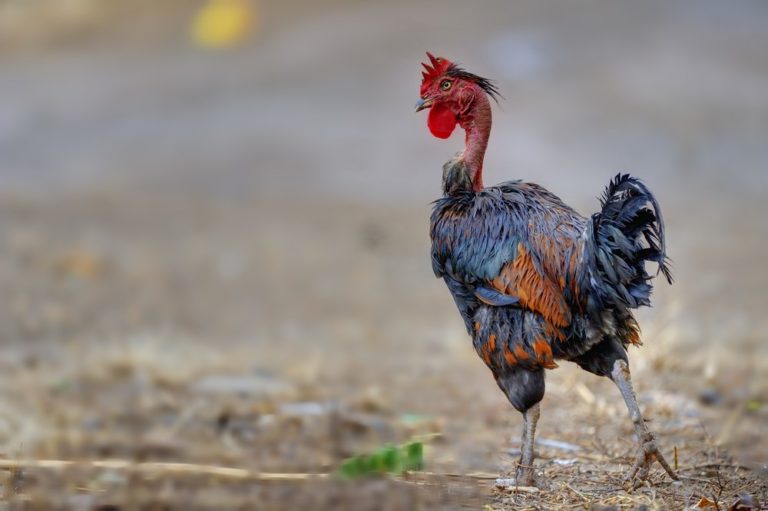
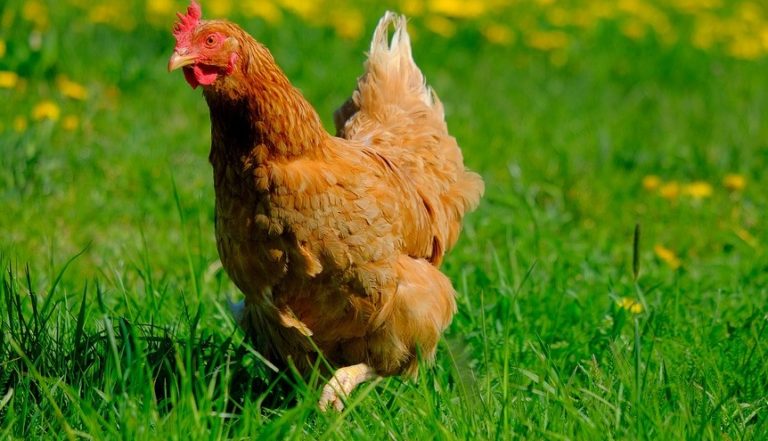
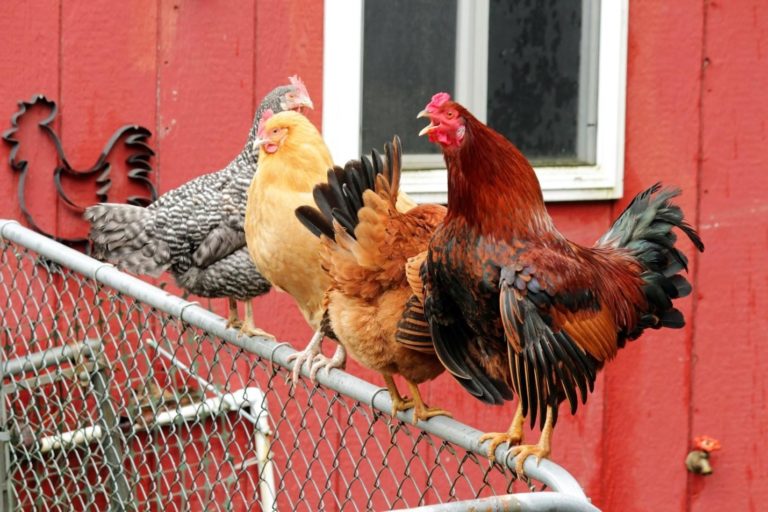
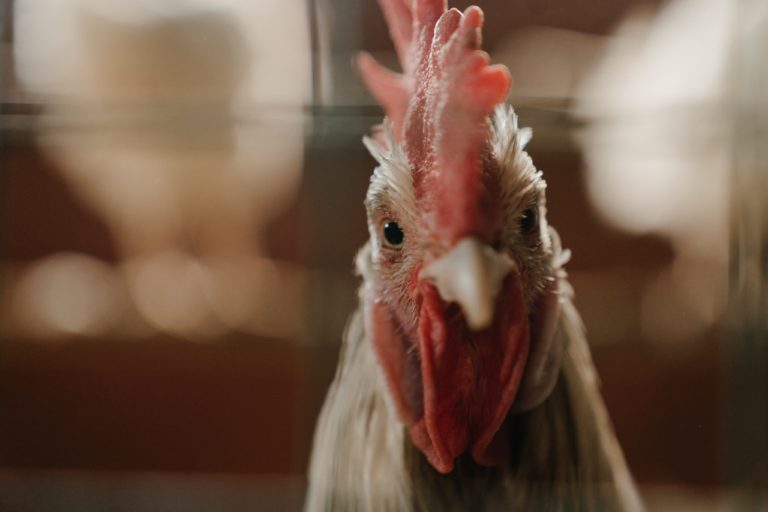
Most owners land here after a week or two of watching, comparing notes with themselves. The tell is usually pattern, not volume: a true molt comes in evenly and symmetrically, old feathers drop with clean shafts, and new pin feathers push through as the old ones leave. Plucking, mites, and nutritional problems look different — patchy bare skin, bloody quills, chewed-off shafts, scabs, or one bird taking feathers off another.
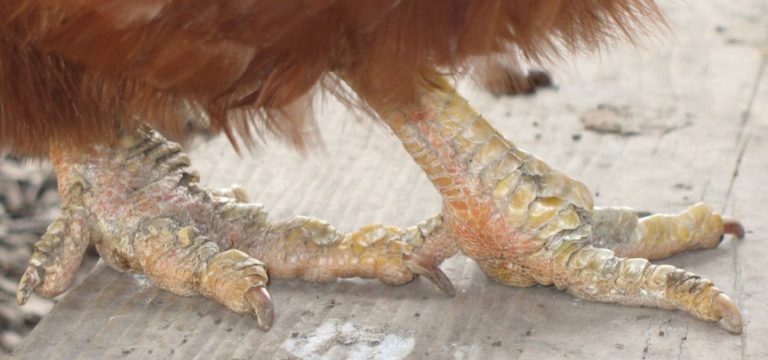
Before you name the behaviour, rule out the physical causes first. Feather mites (and the crossover from the parasites archive) are the most common thing mistaken for plucking, and a poor-protein diet is the second. A hen or parrot pulling her own feathers is telling you something is wrong with her body, her environment, or her mineral intake, long before it’s a psychological habit worth naming. What you actually need is an honest comparison, not a “just a molt” reassurance that misses mites, or a “definitely plucking” verdict that skips nutrition.
For how feather loss sits alongside the rest of what can go wrong with a bird, our bird health guide is the wider map.